Email us: info@bookmyhikes.com
Need help? Call us: +91 9045668969
 Trek : Trekking
 Region : Uttarakhand
 Duration : 6 Days
 Grade : Easy to Moderate
 Max Altitude : 14100 Ft.
 Trekking KM : 37 Km.
 Pickup Point : Rishikesh
 Drop Points : Rishikesh
 Reporting Time : 6:00 am
 Droping Time : 6:30 pm to 7:30 pm
 Train : Haridwar/Rishikesh is the nearest rail head to the base camp
 Base Camp : Pipalkoti
 Food : Meals while on trek & at Hotel/Guesthouse (Veg)
 Stay : Triple or Dormitory basis only(Separate for male & Female)
 Best Season : June | July | August | September
 Air Port : Jolly Grant Airport, which is 21 km away from Rishikesh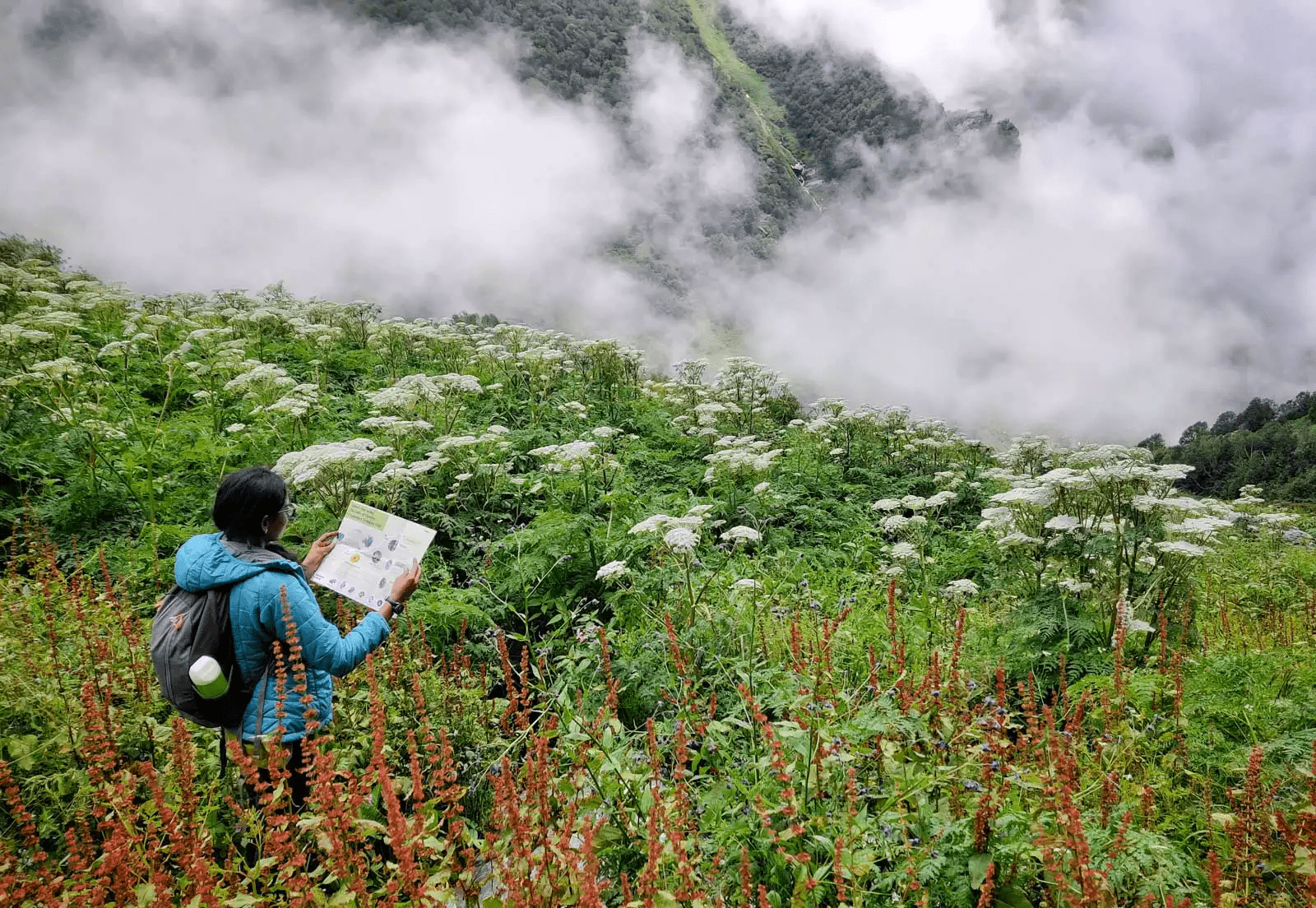
The Valley of Flowers Trek is nestled in the vicinity of the Nanda Devi
Biosphere Reserve and its multitude of blooming flowers covering the
vast expanse of land makes the valley of flowers one of the most
beautiful Himalayan treks our country has to offer. Stretched to an
expanse of 87.5 square kilometers with an altitude of 14,200 ft, the
valley of flowers trek is popular among all kinds of trekkers. The sheer
beauty that the rich biodiversity offers attract many avid nature
lovers and the steep ascents and descents allow trekkers to relish in
the experience of commencing this Himalayan trek and tick it off of
their bucket list. With the Hemkund Sahib awaiting on the other side of
the trek, many pilgrims embark upon the valley of flowers trek as well.
Being one of the oldest known treks, The valley of flower trek came on
every trekker’s radar all over the world when it was declared a world
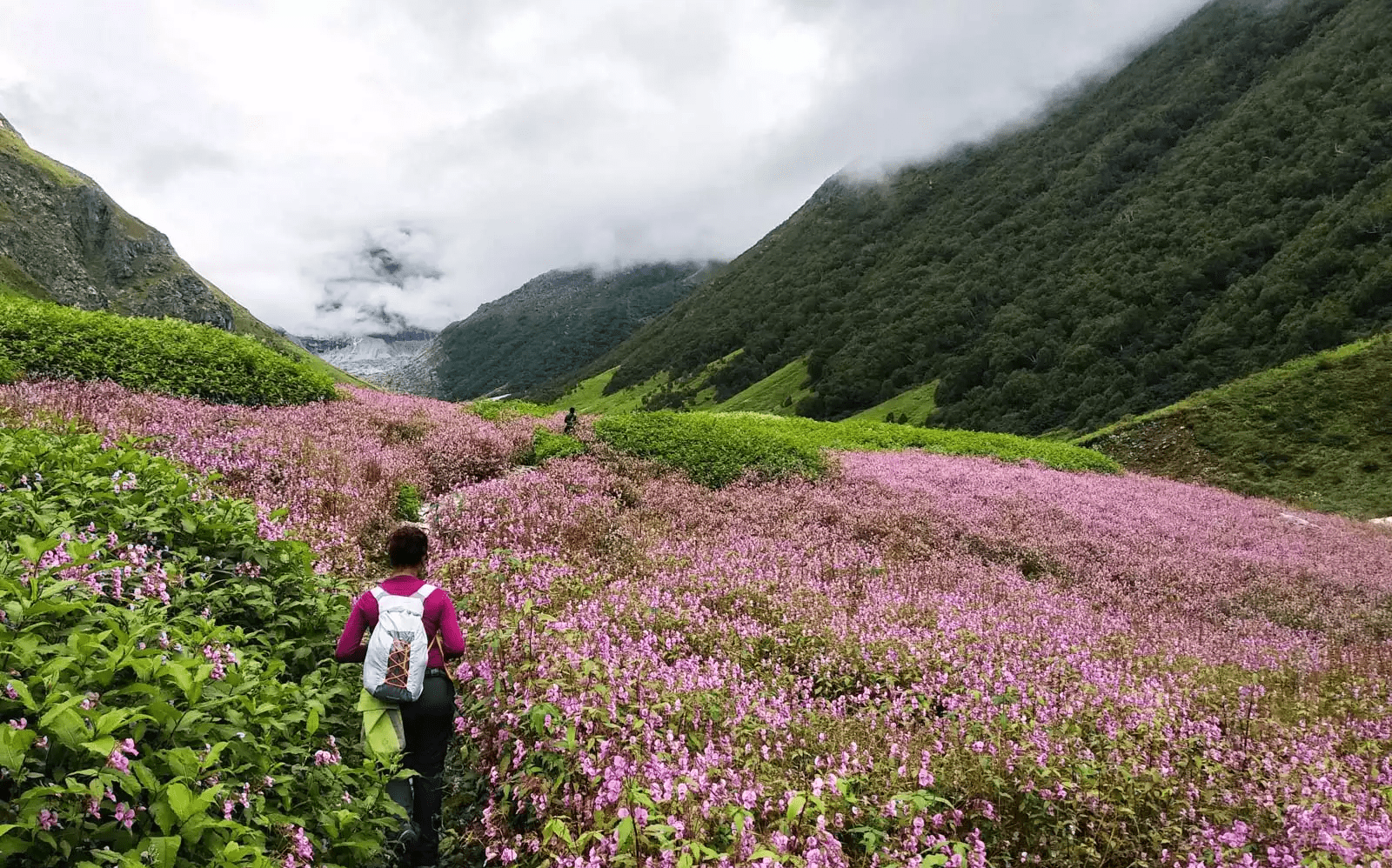
heritage site by UNESCO in 2002. The valley is home to more than 520
species of flowers that come together to form a tapestry of colors in
front of you with dominating shades of pink, blue and purple. The valley
of flowers national park is located in the Chamoli district of
Uttarakhand and along with being home to a diverse range of flora, it is
also home to many endangered animals including snow leopards and red
foxes. Nestled at an altitude of approx 12,000ft, The Valley of Flower
National park along with Nanda Devi National park come together to form a
transition zone between the mighty Himalayas and the Zanskar range of
mountains.
The valley of flowers trek comes under the easy to moderate category
when it comes to grading the difficulty level and is considered to be a
perfect trek for beginners and even a great trek for families. The
hardest climb is the one to Hemkund Sahib Gurudwara which is the highest
Gurudwara in the world and one of the most important pilgrim sites in
Uttarakhand. The valley itself stretches to a length of almost 10
kilometers, with colors of rainbows speckled across the patchwork of
grass, compelling you to stop and look at them closely. The scent of
flora lingers in the air and is hard to miss as you keep traversing
through the valley, walking on the narrow path that cuts across the
flower beds to make way.
In this valley of flower trek itinerary, we start our journey with an
8-hour drive from Rishikesh to Joshimath which is the base camp for the
Valley of flowers trek. Though the drive can seem strenuous, the
beautiful scenery that accompanies you provides you a glimpse at four of
the Panch Prayag which are five holy sites of the confluence of the
river Ganga namely – Devprayag, Rudraprayag, Karnaprayag, and Nand
Prayag will surely this drive a visual treat for your eyes. Upon
reaching Joshimath, we will check into our lodgings and retire for the
night. The next day, we drive from Joshimath to Pulna village which is
the starting point for the valley of flower trek. Upon reaching there,
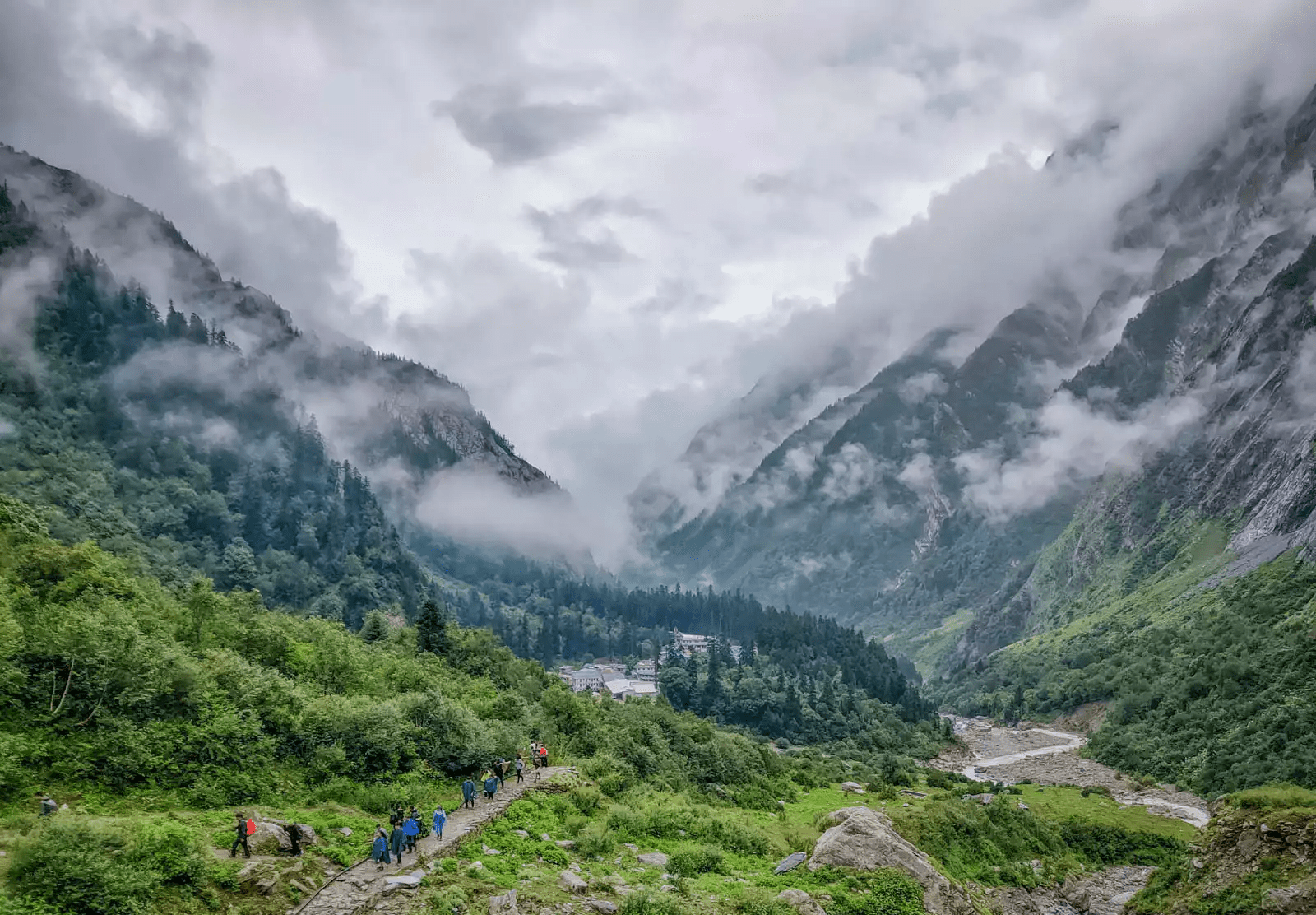
we start trekking to Ghangaria. We gradually ascend on a stretch of a
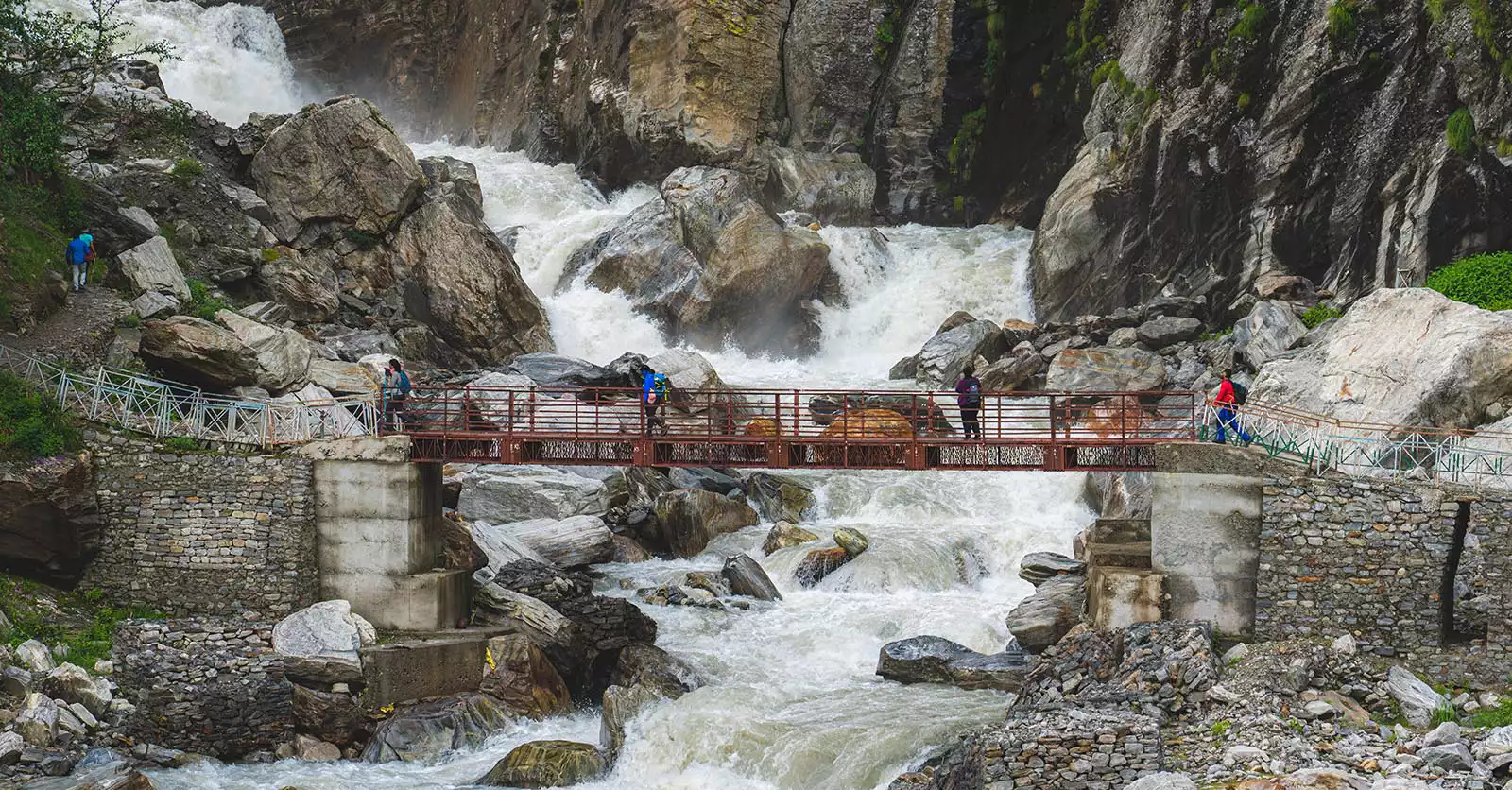
9-kilometer route with the Pushpawati river flowing alongside. The trek
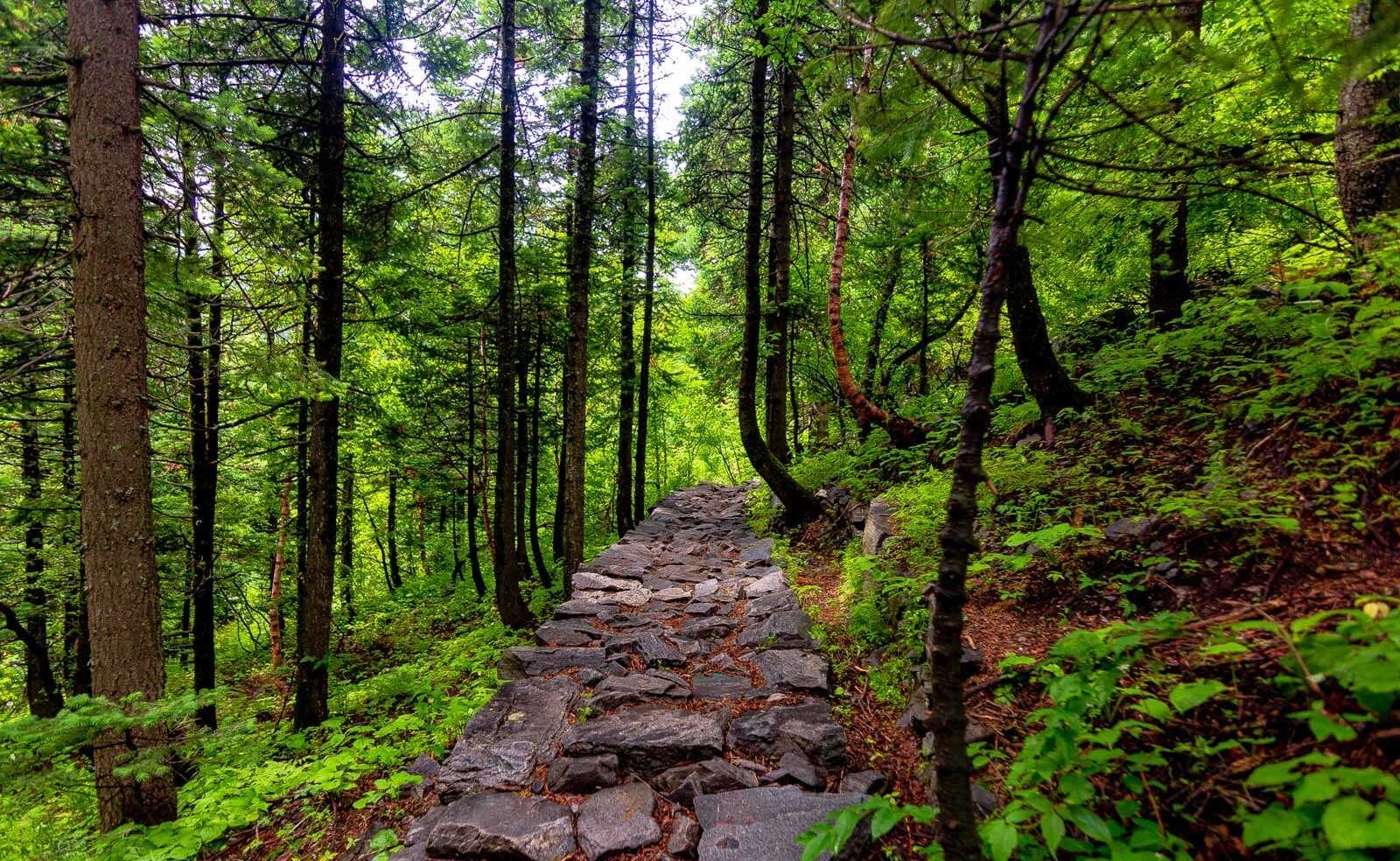
is considered to be of the easy to moderate category with the uphill
route consisting of stone-carved paths and steep ascents testing your
endurance slightly as you walk up to your next campsite, Ghangaria
village which is located at an altitude of 10,000ft. The trail is lined
with many small dhabas so you will have plenty of resources to refill
your water bottles and get snacks as you move forward. After walking for
almost half of the distance, you will be able to see the Hathi Parvat
ranges in front of you. From there on the climb is steep and you’ll be
required to maintain proper footing until you reach your campsite.
The next day you will be able to traverse through the valley of flowers.
But before that, you have to cover at least a stretch of 4 kilometers
of land. As you keep walking for at least 10 minutes, you will stumble
upon the Laxman waterfall which gushes streams of sparkling water, the
sight of which will surely refresh you. After a few minutes, you will
reach the forest check post, from where you can buy tickets. The check
post signifies your proximity to another marvel of nature in the form of
a wooden bridge that is perched upon the Pushpavati river. No sooner
after you have crossed the bridge, mountains will start peeking from
behind. Every direction that you take will seem like a natural paradise
because all colors of the rainbow are now on the ground in the form of
blooming flowers. The difficulty level of the valley of flowers trek
becomes easier here as you have to walk flatly throughout the valley.
Adorning the Himalayan peaks with different hues belonging to native
flowers like poppies, Himalayan roses, geraniums, etc. The flowery
carpet will end after a 5-kilometer stretch at a glacier but the sight
of the majestic Himalayan peaks of Nilgiri Parvat, Bhyundar Khal,
Rattan, Gauri Parvat, etc still make the view picturesque with a cold
stream of water flowing throughout. Eating and camping in the valley
aren’t allowed so you will have to head back to Ghangaria and retire for
the night.
The hardest part of the valley of flowers trek commences the next day as
you head out for Gurudwara Hemkund Sahib, nestled at an altitude of
14,107 ft, it is the highest Gurudwara in the world. The six-hour-long
trek from Ghangaria to Hemkund Sahib is challenging in more than one
way, the first one being that in a matter of a few hours, you gain an
altitude of 5,000ft and the scenic views are replaced by steep descents
making the climb rather strenuous. As you keep walking, you will be able
to look over the entire valley of flowers and soon a cascading
waterfall will come into view. You’d be able to feel the low oxygen
levels as you gradually ascend, and that is your cue to keep drinking
water as much as you can. After traversing on stone-paved pathways and
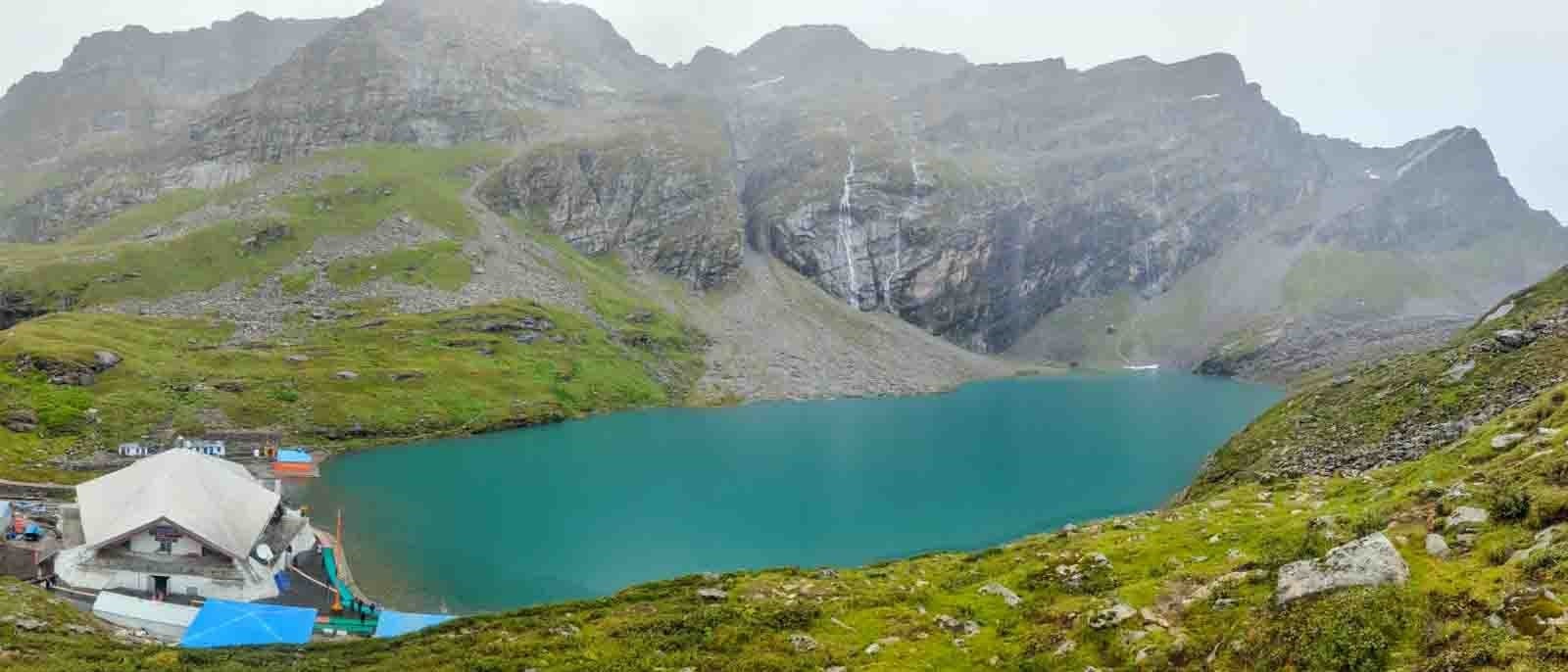
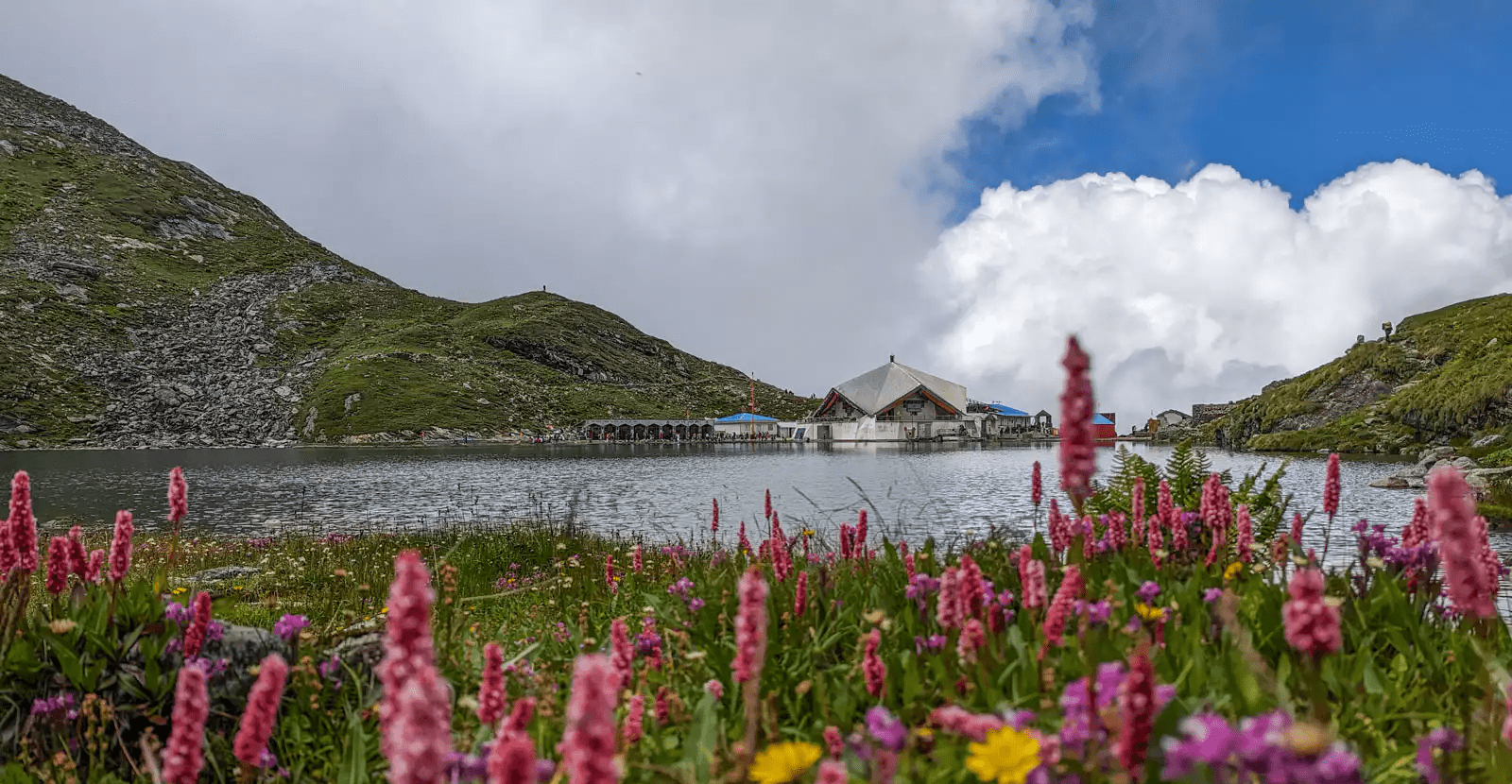
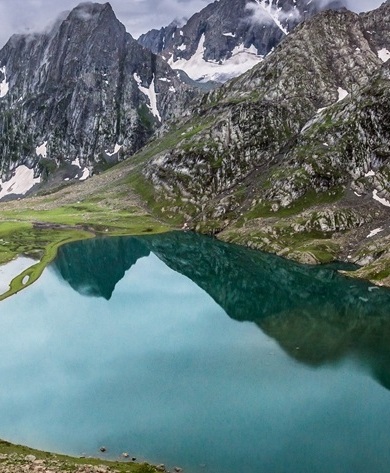
stumbling upon melting glaciers, Gurudwara Hemkund Sahib will bless you
with the Hemkund lake right by its side, mirroring its pristine beauty.
All your efforts will feel worth it once you have a cup of hot piping
chai and a mouthful of khichdi that is distributed during the Langar.
As you stroll on the premise, you’d feel a sense of peace that you won’t
find anywhere else. The lake, which is formed by the melting glaciers
of Hathi Parvat and Saptarishi peaks, reflects the grandeur of the
mountain as well. When the skies are crystal clear, you get a view of
the Saptarishis peaks beckoning you closer while on the lakeside, rare
flowers like the Brahma Kamal add more charm to the beauty of Hemkund
lake. On a clear day, you will be able to glimpse at the Himalayan peaks
of Nilgiri Parvat, Bhyundar Khal, and Gauri Parvat as well. A temple
dedicated to Laxman, Lord Rama’s brother is also situated near the lake
and you can pay your respects there as well. You will soon have to
descend and the 7-kilometer walk can put a strain on your muscles. The
next day is relatively easier as the descent to Pulna village would feel
easier than the steep uphill climbing of the previous day. The trail is
lined with enough dhabas and snack shops making it even easier to
descend and in no time you’d have reached the base from where we’d be
driving to Joshimath commencing our valley of flowers trek. Being one of
the most well-known treks in the Indian Himalayas, the Valley of
Flowers trek is quite safe. It has well-laid trails frequented by
pilgrims. However, one needs to be careful on the slippery sections of
the trail, especially during the rainy season.
The best time to do the Valley of Flowers trek is in July and August
when the blooming of flowers is at its peak. The prominent species of
flowers that avid nature lovers find here are Brahmakamal, Blue Poppy,
Cobra Lily Anemone, Geranium, Marsh Marigold & Primula. Also, the
valley has to offer much more than flowers. There are waterfalls,
glaciers, towering mountains, gushing rivers, and quaint villages, not
to mention an abundance of peace
Note: The pickup point is Natraj Chowk / Tapovan Chowk (tentative).
Please reach Rishikesh a day before to avoid any delays.
Update you latter.
Update you latter.
+5% GST (goods and services tax).
We'll guide you.